AI in Industry: Data and Human Expertise at Micronora 2026
At Micronora 2026 in Besançon, Pierre-Jean Leduc, President of DEMGY Group and of Polyvia, the French national trade association of plastics and composites manufacturers, presented a pragmatic view of AI in industry: the technology improves responsiveness when it relies on controlled industrial data and on domain expertise.
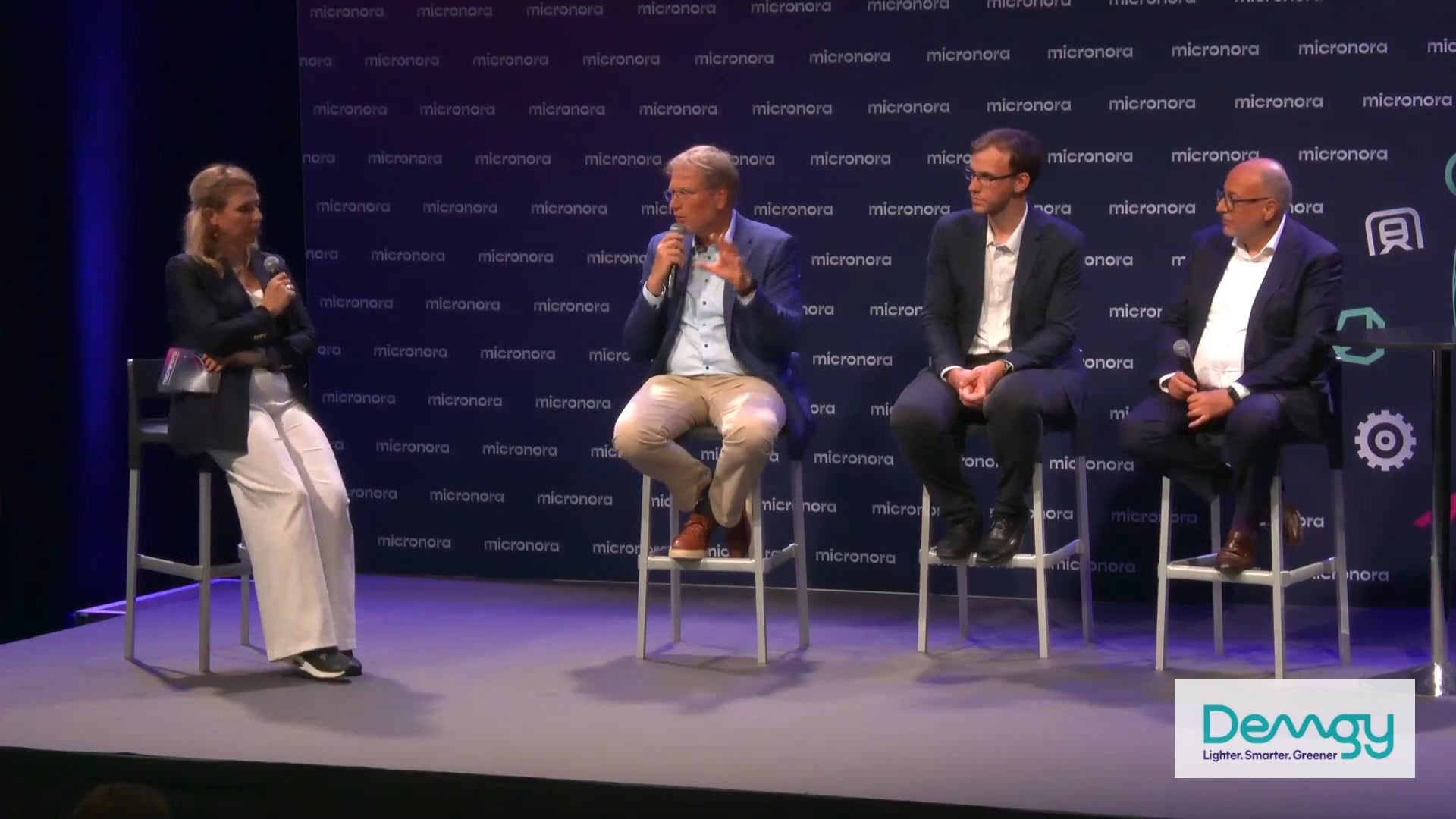
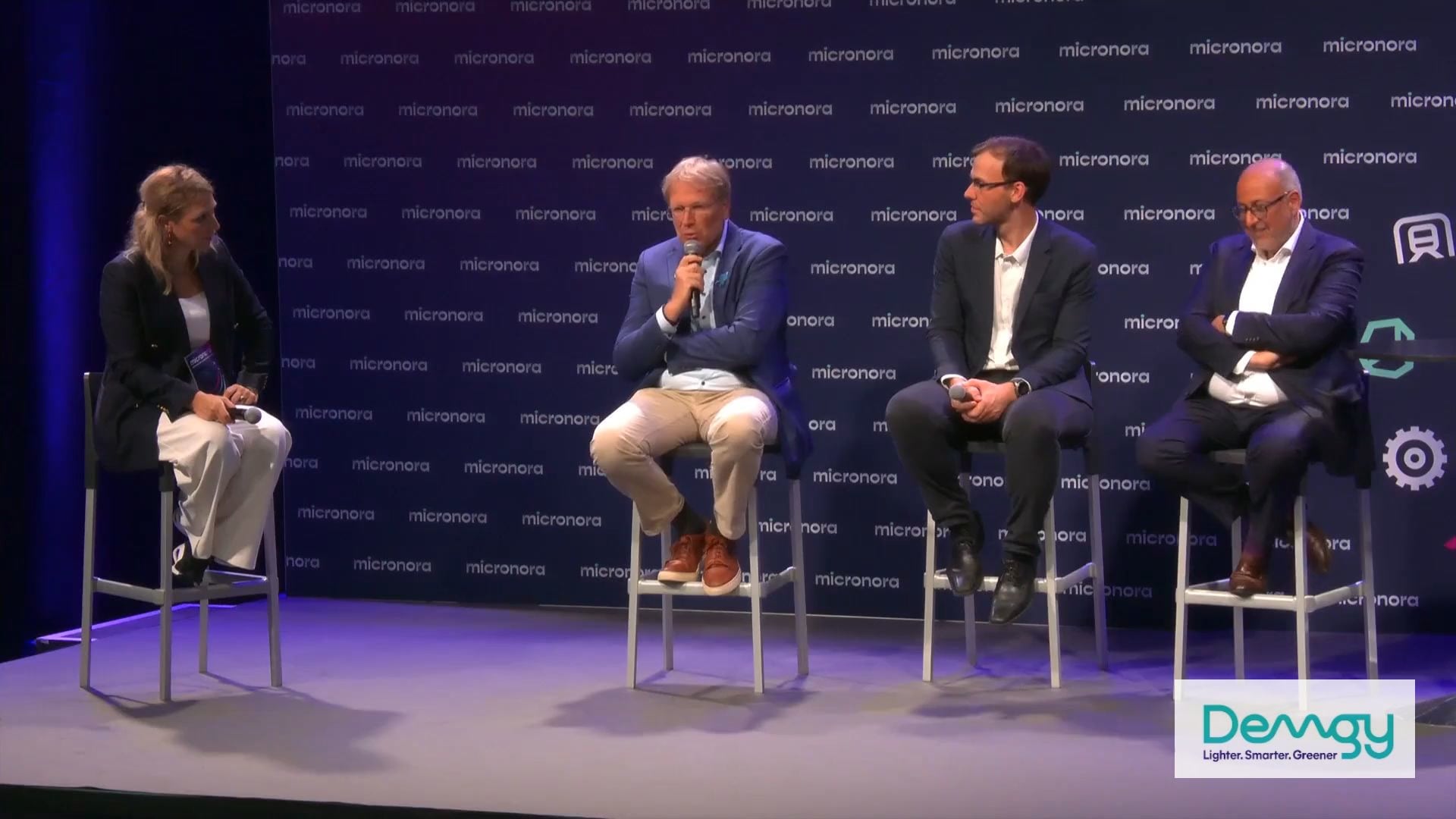
The talk was part of the round table "AI, Data and Human Expertise: the New Levers of Industrial Competitiveness", held during Micronora 2026. In this exchange between business leaders, Pierre-Jean Leduc discussed the topic with Élie Cohen and Tanguy Aurore, respectively Managing Director and Data Practice Leader at Consort Group.
Industrial AI serves business performance first
Industrial AI refers to the application of artificial intelligence techniques to concrete industrial needs, from access to information to the use of domain data.
For Pierre-Jean Leduc, artificial intelligence is not a technological end in itself. It must allow a company to extend its capabilities, become more responsive and reduce the time spent on tasks that add no value.

This approach places AI in industry at the level of real use cases. Automating a repetitive operation, finding information faster or supporting an analysis creates value only if the result improves an existing industrial process.
Industrial data determines the quality of results
Industrial AI is only truly useful if the data it uses is reliable, structured and suited to the business context.
Industrial data covers in particular materials knowledge, project histories, production parameters, contractual requirements and environmental information. Its quality directly determines the relevance of the answers and analyses produced.
DEMGY Group already has structured resources tied to its activity. Pierre-Jean Leduc cites in particular Datacomp, DEMGY Group's materials database, which cross-references information to provide solutions to customers. This kind of knowledge capitalisation can evolve with new ways of exploiting data and artificial intelligence.
The principle remains simple: approximate or poorly contextualised data does not become reliable because an AI tool processes it. A technological veneer does not turn bad data into a good decision.
AI in industry also changes relationships between partners
The adoption of artificial intelligence by customers, partners and suppliers is gradually changing how industrial information circulates and is analysed.
Technical and contractual requirements are increasingly fed into structured systems. For industrial companies, the ability to organise their data and produce clear information therefore becomes a factor of responsiveness in the relationship between partners.
This shift also strengthens the case for knowledge capitalisation. Experience, tests and decisions accumulated over the course of projects can be retrieved and reused more easily, provided they have been documented consistently.
Protecting industrial data requires a cybersecurity framework
Protecting industrial data relies on control over the tools, the access rights and the information entrusted to artificial intelligence systems.
A query may contain information about a customer, a part, a process, a drawing or a project. Pierre-Jean Leduc therefore calls for lucidity about how this information is stored, whether it may be reused, and the risks of industrial espionage.
Artificial intelligence also changes cybersecurity risks. It can make certain cyberattacks easier, but it can also help strengthen defences. The response relies on validated tools, user training, a ban on sending confidential information to uncontrolled services, and verification of results.
Pierre-Jean Leduc also indicates that DEMGY Group holds cybersecurity certifications. This approach complements the Group's usual requirements for quality, safety, environment and compliance, described on the page dedicated to DEMGY Group plant certifications.
In this context, the use of AI does not replace any validation process. The data used, the analyses produced and the content generated must remain compatible with the contractual, regulatory and documentation requirements applicable to each activity.
Human expertise remains accountable for the decision
Human expertise remains essential to check results, understand the industrial context and make the final decision.
A plausible answer is not necessarily a correct one. Interpreting a specification, choosing a material, assessing a risk or validating a solution requires judgement, experience and knowledge of the trade.
Artificial intelligence can speed up access to knowledge and assist with certain processing tasks. It replaces neither technical validation nor professional responsibility. Its value lies in how it augments the know-how already available.
Applications tied to industrial and environmental challenges
Combining AI, industrial data and domain expertise opens concrete applications in materials management, reporting and environmental monitoring.
Pierre-Jean Leduc mentions in particular the use of materials data, the carbon footprint of parts, the recycled-content rate and the consolidation of information from different sites. These topics address real industrial needs, but they require consistent, traceable data.
For DEMGY Group, the point is therefore not to deploy an AI disconnected from shop-floor practices. It is to make better use of available knowledge, gain responsiveness and focus human skills on the activities where they create the most value.
Watch the full conference
Watch Pierre-Jean Leduc's full talk at the round table "AI, Data and Human Expertise: the New Levers of Industrial Competitiveness" at Micronora 2026.